Finger Stamp Display Font for Handmade Creatives
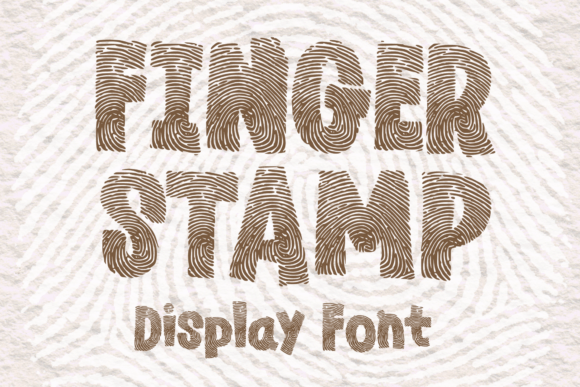
It started with a candle label. I’d just finished pouring my first small-batch lavender-vanilla soy candles, and the clean kraft labels felt… too quiet. They needed warmth, personality—something tactile that whispered “handmade” before anyone even smelled the wax. That’s when I opened Finger Stamp, the Display font with actual fingerprint texture baked right into every letter. Not a filter. Not a layer. Real, organic imperfection built into the Fonts themselves. And just like that, my “Small Batch Candle Co.” tag went from polite to personable.
Finger Stamp for Greeting Cards and Handwritten Charm
Greeting cards are where Finger Stamp shines brightest—not as body text, but as the heartbeat of the design. I used it for the phrase “You’re One in a Million” on a set of birthday cards for kids, pairing it with a soft, rounded sans serif for the inside message. The fingerprint texture gave the title weight and whimsy without looking childish or cartoonish. Because Finger Stamp is a true Display font, it holds up beautifully at 48–72 pt on printed cards—and even scales well down to 36 pt for smaller greeting card headers. Just avoid using it below 24 pt for physical prints; the fine texture starts to blur on standard home printers. For digital card previews (Etsy listings, Canva mockups), it renders crisply across devices—especially when exported as high-res PNGs with transparent backgrounds.
Finger Stamp for Kids Party Needs and Playful Branding
When designing printable party kits—think cupcake toppers, banner letters, and favor tags—I reached for Finger Stamp every time. Its fingerprint grain adds instant authenticity to “Happy Birthday,” “Treat Table,” or “Thank You!”—no extra textures or overlays needed. As a Display font, it’s meant for short bursts: names on party hats, chalkboard-style signs, or the bold “SURPRISE!” on a pop-up invitation. I tested it on matte sticker paper for cupcake toppers—cut cleanly on my Cricut Maker, no jagged edges—and held up perfectly after hand-stamping a few dozen “Party Crew” tags onto jute twine. Bonus? It pairs effortlessly with friendly script fonts for subheadings or handwritten-style sans serifs for instructions—keeping the whole kit cohesive but layered.
Finger Stamp for T-Shirts and Clothing Designs with Texture
For t-shirt designs, Finger Stamp delivers something rare: visual texture you can *feel* in the print—even on screen. I laid it over a faded denim background for a unisex “Little Hands, Big Dreams” tee, then ran a quick test print on heat-transfer vinyl. The subtle ridges in the letterforms translated beautifully into the final press: not overly busy, but unmistakably handmade. Because Finger Stamp is a single-weight Display font (no bold or light variants), I kept layouts simple—centered phrases, generous spacing, and always paired it with a neutral sans serif for care instructions or sizing tags. Pro tip: convert text to outlines before sending to your DTG printer or vinyl cutter. That preserves the fingerprint integrity—no font substitution surprises mid-production.
Finger Stamp for Kids Book Designs and Storytime Visuals
In early reader covers and chapter headings, Finger Stamp adds gentle character without overwhelming young eyes. I used it for the title “Benny’s Button Box” on a printable board book cover—paired with a warm, open serif for the author line. The fingerprint detail feels like a thumbprint left behind by the story’s hero, inviting touch and connection. As a Display font, it’s ideal for titles, section breaks, and decorative initials—but never body copy. Always check your file format: the included OTF version works flawlessly in Adobe Illustrator and Affinity Designer; the TTF handles well in Canva and Silhouette Studio. And yes—it’s fully licensed for commercial use, so you can sell physical books, digital PDFs, or editable Canva templates without hesitation.
Finger Stamp for Wedding Invitations and Elegant Branding
Yes—even weddings. Don’t skip Finger Stamp for rustic-chic or modern-minimal invites. I designed a set for a vineyard ceremony using it only for the couple’s names and “Join Us” on the main invite, then switched to a delicate serif for date, time, and location. The fingerprint texture softened the formality just enough—like ink pressed by hand, not machine. On luxe cotton paper, the effect was quietly stunning. For digital RSVP cards or wedding website banners, Finger Stamp adds instant warmth and distinction among dozens of generic scripts and serifs. Just remember: this is a Display font, not a workhorse. Use it for moments that need presence—not paragraphs that need clarity.
Finger Stamp for Packaging Design and Boutique Tags
Your packaging tells your brand’s first story—and Finger Stamp makes that story feel human. I stamped it onto kraft gift tags for handmade soap bars (“Oat + Honey”), then laser-printed matching “Hand-Poured With Care” seals for the boxes. The fingerprint grain echoed the handmade swirls in each bar. Because Finger Stamp is a clean, legible Display font—not overly ornate—it reads instantly at small sizes (down to 14 pt on 2x3" tags) while still feeling special. For SVG cut files (Cricut, Silhouette), outline the text before saving—then test a single letter cut first. The texture holds up best on medium-thickness cardstock or matte vinyl, not ultra-thin sticker paper.
What to Check Before You Download Finger Stamp Fonts
- Licensing: Confirmed commercial use—covers physical goods, digital downloads, and templates.
- Formats: Includes OTF and TTF—works across Adobe apps, Canva, Cricut Design Space, and Silhouette Studio.
- Pairing: Best with airy sans serifs (like Montserrat or Poppins), gentle serifs (Lora, Cormorant), or relaxed scripts (Pacifico, Qwigley).
- Readability: Designed for display—ideal for headlines, names, titles, and short phrases. Avoid long blocks or tiny labels under 12 pt.
- Texture Tip: The fingerprint effect is most visible at 24 pt and above on screen, and 36 pt+ in print.